
Franchise Supply Chain Management That Scales
Franchise supply chain management protects quality, controls waste and keeps stores ready for products customers return to buy each day across your store network.
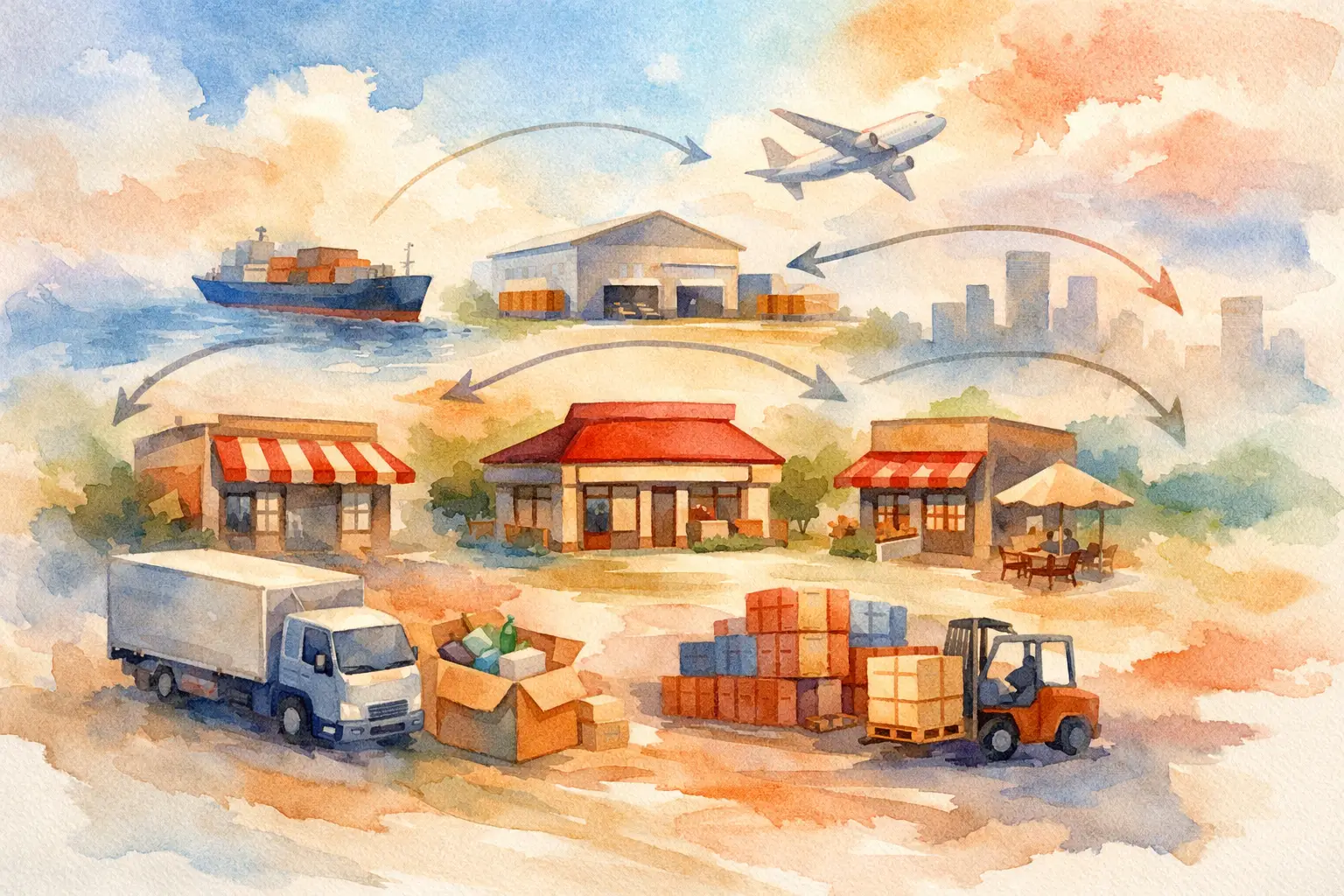
A frozen yoghurt machine can be switched on in minutes. Building a dependable supply system behind it takes far more thought. Franchise supply chain management is what makes sure a customer in Melbourne gets the same craveable swirl, premium topping and on-brand experience as a customer in Perth - without franchisees spending their week chasing deliveries, comparing suppliers or running out of bestsellers on a Saturday.
For a dessert franchise, supply chain is not a back-office detail. It directly affects product quality, food cost, labour pressure and the confidence a new owner has on opening day. Get it right and the store feels easy to run. Get it wrong and a great-looking menu can quickly become an expensive headache.
Why franchise supply chain management matters
Customers do not see supplier agreements, delivery schedules or stock forecasts. They see the result: the matcha soft-serve that tastes right, the toppings that look fresh, the packaging worth photographing and the menu item they came back for last time.
That consistency is especially important when your brand is built around visually shareable food. A substitution that looks minor on a spreadsheet can change the colour, texture or presentation of a product. It can also create training issues. If one store uses a different ingredient or cup size, staff have to remember another process and customers may notice the difference.
For the franchisee, a centralised approach removes a major layer of complexity. Rather than sourcing every ingredient, testing vendors and negotiating terms from scratch, they can focus on the work that grows the store: leading the team, creating local energy and delivering a brilliant customer experience.
It also gives the network better buying power. When a franchisor forecasts demand across multiple sites, it can work with suppliers on pricing, specifications and availability in a way a single independent outlet may struggle to achieve. That does not mean costs never move. Dairy, freight, packaging and seasonal produce all have their own pressures. It does mean those movements can be managed with a clearer plan.
The building blocks of a supply chain that works
A strong system starts before the first store opens. It begins with a menu designed for repeatability, not just a one-off launch photo. Every ingredient needs a clear specification, a reliable source and a sensible place in the store's storage capacity.
Products that travel well and serve consistently
Frozen desserts rely on cold-chain discipline. Product must arrive at the right temperature, be stored correctly and be easy for teams to rotate using first-in, first-out principles. The most exciting seasonal special is not commercially smart if it is difficult to distribute, takes up half the freezer or requires a different process at every site.
This is where menu development and supply chain planning need to work together. A limited-time flavour can create social buzz and give regulars a reason to return, but it should be tested against lead times, supplier capacity, shelf life and expected volume. Sometimes a narrower special with a dependable supply path is a better decision than a complicated menu item that looks good only in a product shoot.
Approved suppliers and clear standards
Approved suppliers are about more than convenience. They create an agreed standard for ingredients, packaging and operating supplies, while helping protect food safety and brand presentation. The goal is not to strip every decision away from a franchisee. It is to keep the decisions that affect customer trust, product quality and unit economics under control.
There is still room for local judgement. A franchisee understands their centre, high street or food-hall trade better than anyone. They may see a local event coming, identify a shift in weekend traffic or know that school holidays will lift demand. The supply model should give them an easy way to order appropriately within the approved system, rather than forcing them to improvise outside it.
Forecasting without pretending demand is fixed
Forecasting is where practical operators make a real difference. Opening weeks, heatwaves, public holidays, nearby events and new menu launches can all change demand quickly. Ordering too little means missed sales. Ordering too much risks waste, tied-up cash and a crowded freezer.
The answer is not perfect prediction. It is a repeatable rhythm: use sales data, watch trading patterns, plan for known peaks and review variances often. New franchisees may begin with franchisor-recommended par levels, then refine their orders as they learn their site. A compact kiosk with strong lunchtime trade will not necessarily order like a full retail store that peaks after school and on weekends.
What franchisees should expect from the franchisor
A serious franchise platform should make supply chain support visible, not vague. Before signing, prospective owners should ask how products are sourced, how often deliveries can be made, what the minimum orders are and what happens if an item is unavailable.
They should also understand the practical realities of the site. Does the fit-out include enough dry, chilled and frozen storage? Is delivery access workable for the location? Who receives stock when a delivery arrives during a busy period? These questions may sound operational, but they have a direct impact on labour planning and waste.
At YOVIE, supply chain sits alongside recipes, menu development, training and ongoing operational support because those functions need to work as one. A franchisee should not have to become a procurement specialist before they can run a sharp, customer-facing dessert business.
The most useful support is often simple and specific: ordering guides, product specifications, opening stock plans, delivery procedures, temperature checks and clear escalation when something goes wrong. Hospitality is fast-moving. When a shipment is delayed or a supplier has an issue, franchisees need straight answers early enough to protect the day’s trade.
The trade-offs behind centralised supply
Centralised buying brings consistency and purchasing power, but it is not a magic fix for every supply challenge. Australia is a large market, and freight conditions can vary between metropolitan and regional locations. A supplier arrangement that works perfectly for inner-city stores may need different delivery planning for a regional site.
There is also a balance between menu variety and operational simplicity. More toppings, more cups and more limited editions can create excitement, but each new stock keeping unit adds forecasting, storage and training demands. The best franchise menus are not necessarily the biggest. They are the ones that give customers enough choice while keeping service quick, product quality high and stock manageable.
Franchisees should look for a brand that is disciplined about this balance. A menu people crave is valuable. A menu the team can execute consistently during a rush is what turns that demand into profitable sales.
How supply discipline supports multi-store growth
For an owner with ambitions beyond one location, supply chain becomes even more important. Multi-site growth is difficult if every store has its own suppliers, ordering habits and product substitutions. Standard systems let an operator compare performance, move trained team members between sites and know what customers will receive wherever they visit.
The same discipline supports better decision-making. When product ranges, pack sizes and ordering methods are consistent, it becomes easier to see where food cost is moving, which promotions are working and where waste needs attention. That creates a stronger foundation for a second store than simply relying on instinct.
A franchise business should give ambitious owners room to lead, while removing unnecessary reinvention. You bring the local drive, capital and hands-on leadership. The system should bring the product infrastructure that lets you concentrate on building a business customers want to visit again.
The right question is not whether supply chain management sounds exciting. It is whether it makes your store easier to operate, protects the product customers photograph and gives you confidence to grow. When those basics are handled properly, the customer only notices the part that matters: a dessert worth coming back for.