
Is a No Experience Hospitality Franchise Right?
Considering a no experience hospitality franchise? Learn what you need to bring, what support matters and how to assess a viable Australian opportunity.
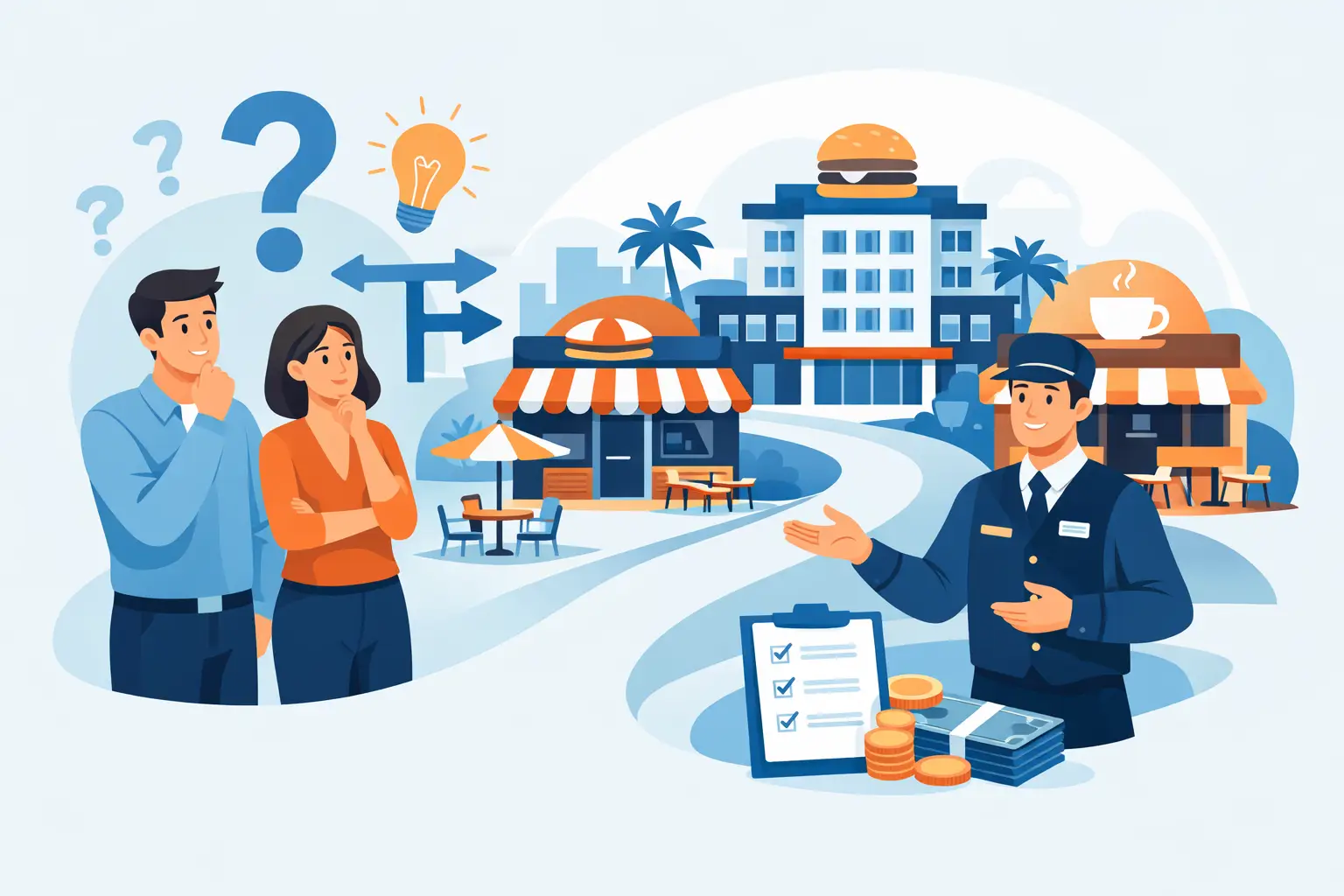
A no experience hospitality franchise can be a smart way into business ownership, but it is not a shortcut around commitment. You may not need a chef’s background or years on the floor, yet you do need the judgement to lead people, follow a system and show up when it matters. The right franchise replaces much of the start-from-scratch complexity with a proven brand, practical training and a clear operating playbook.
For ambitious Australians ready to move from corporate life, invest in a first business or add a consumer-facing site to an existing portfolio, that can be a compelling proposition. The key is knowing the difference between no prior hospitality experience and no responsibility. They are very different things.
What a no experience hospitality franchise really requires
The strongest hospitality franchisees are not always career hospitality operators. They are often organised, commercially aware people who can create a good team culture, keep standards high and make decisions based on the numbers rather than instinct alone.
A customer might only see a colourful cup, a great soft-serve swirl and a store they want to photograph. Behind that moment sits rostering, stock control, food safety, local area marketing, daily cash management and a team that knows how to deliver fast, friendly service. A franchise system should make those jobs easier to learn and repeat. It cannot make them disappear.
That is why attitude matters so much. You need to be comfortable being hands-on, especially through recruitment, training and the opening period. You also need to be willing to use the franchisor’s systems as designed. Franchise ownership offers room for leadership and local market knowledge, but it is not the place to reinvent the menu, store look or service model every week.
What a capable franchisor should provide
Starting independently means solving every major question yourself: which site to lease, how to build it, what products to sell, where to source them and how to get customers through the door. That can be exciting, but it can also be expensive tuition.
A well-built franchise platform should reduce that burden by providing the infrastructure before you open. Look for support that is specific, not broad promises about being there for you. It should cover site selection assistance, store design and fit-out guidance, initial training, recipes, supplier relationships, marketing assets, launch planning and ongoing operational support.
Training is particularly important when hospitality is new territory. Good training should take you beyond product preparation. You should understand opening and closing procedures, hygiene requirements, team recruitment, rostering, customer recovery, ordering, wastage and how to read a weekly performance report. Your first weeks of trade are a poor time to discover that the training stopped at making a product.
With YOVIE, the model is designed to give franchisees the brand, menu, supply chain, store framework and operational support needed to focus on leading the business locally. That matters in dessert retail, where consistency, speed and presentation all influence whether a customer comes back or posts their visit.
A brand people recognise is only the beginning
A visually strong brand can earn attention. A menu people crave can create repeat visits. Neither is enough if the day-to-day operation is difficult to control.
Assess how the offer works at busy times. Does the menu require a large kitchen team, or is it designed for efficient service? Are ingredients straightforward to receive and store? Can staff learn the product standards quickly? For a first-time operator, lower labour complexity can be a genuine commercial advantage, provided the customer experience still feels special.
This is where a modern frozen yoghurt and matcha dessert concept can make sense. Customers are looking for treats that feel fresh, shareable and worth leaving the house for. But the opportunity still depends on the individual site, local competition, rent, trading hours and your ability to run a disciplined operation.
The investment conversation should be direct
Hospitality ownership is a serious investment, so vague financial language is a warning sign. A franchisor should be clear about the likely upfront investment, the capital you need available, the term of the agreement and what is included in the package.
For example, YOVIE’s turnkey investment starts from $350K + GST, with at least $150K in liquid capital required. Qualified applicants may be able to access finance, but finance approval is not a reason to stretch beyond a sensible personal position. You still need to allow for working capital, living costs while the business establishes itself and a buffer for the unexpected.
Ask direct questions about occupancy costs, fit-out assumptions, equipment, opening stock, technology, training and marketing. Ask what sits outside the initial investment estimate. A strong opportunity will not pretend every site costs the same, because kiosk, food-hall, high-street and full retail formats can have very different requirements.
You should also understand the franchise term. A renewable 5 + 5-year agreement may offer a meaningful runway to build the business, but renewal conditions, transfer terms and ongoing fees need to be understood before you sign anything. Obtain independent legal, accounting and financial advice. Being enthusiastic about the brand and careful with due diligence can coexist.
Choose a format that fits how you want to operate
Your ideal first store is not necessarily the biggest or busiest location on paper. A compact kiosk can offer a more focused operating model and lower staffing requirements. A food-hall site may benefit from existing foot traffic but face intense nearby choice. A high-street store can build local presence, while a larger retail space may suit an operator with more capital, management depth and ambition for a destination experience.
The question is not simply, “Which site makes the most sales?” It is, “Which format can I operate well with my capital, time and local knowledge?” A first-time franchisee who understands their limits is often in a better position than someone chasing scale before the foundations are right.
If your goal is a multi-store portfolio, ask how the model supports that path. The first store should teach you how the systems work, what strong staffing looks like and which local marketing activities genuinely drive sales. Expansion is more credible when it follows a well-run first site, not a rushed launch plan.
Your role is to lead the local business
The franchisor can develop the product, protect the brand and provide operational direction. You bring local energy. You hire the people customers will remember, build relationships in your catchment and keep the store sharp when no one from head office is standing beside you.
That includes using social media well without confusing content with commercial performance. A photogenic dessert can bring new customers in, particularly with a youth-led brand. Repeat purchase comes from quality, consistency, clean presentation and service that makes a quick treat feel like a good part of someone’s day.
The best franchisees learn to watch both sides of the business. They notice whether the store looks inviting from the footpath, whether their team is engaging customers and whether the menu is being made correctly. They also track labour, wastage, average transaction value and stock movement. One without the other is not enough.
Questions worth asking before you apply
Before progressing with any no experience hospitality franchise, be honest about what you want from ownership. Do you want a business you actively lead, or a passive investment? Are you prepared to work through weekends, public holidays and the pressure of an opening? Can you fund the business without putting every dollar of your personal security at risk?
Then test the franchisor’s answers. Speak with existing franchisees where possible. Ask what surprised them in the first six months, how quickly training translated to the shop floor and what support looked like when a problem arose. Ask how territory allocation works, particularly if foundation-store opportunities offer preferred areas or commercial advantages.
You are not looking for a business with zero challenges. You are looking for a brand that gives you straight answers, a model you can understand and support that remains useful after the launch excitement has passed.
No hospitality experience can be an advantage when it means you arrive ready to learn rather than determined to do things the old way. Bring the capital, commitment and leadership mindset, then choose a franchise system that gives your ambition somewhere solid to grow.