
What Makes a Self-Serve Frozen Yogurt Brand Work?
See what makes a self-serve frozen yogurt brand worth backing, from repeat visits and menu appeal to systems, site fit and franchise support at scale.
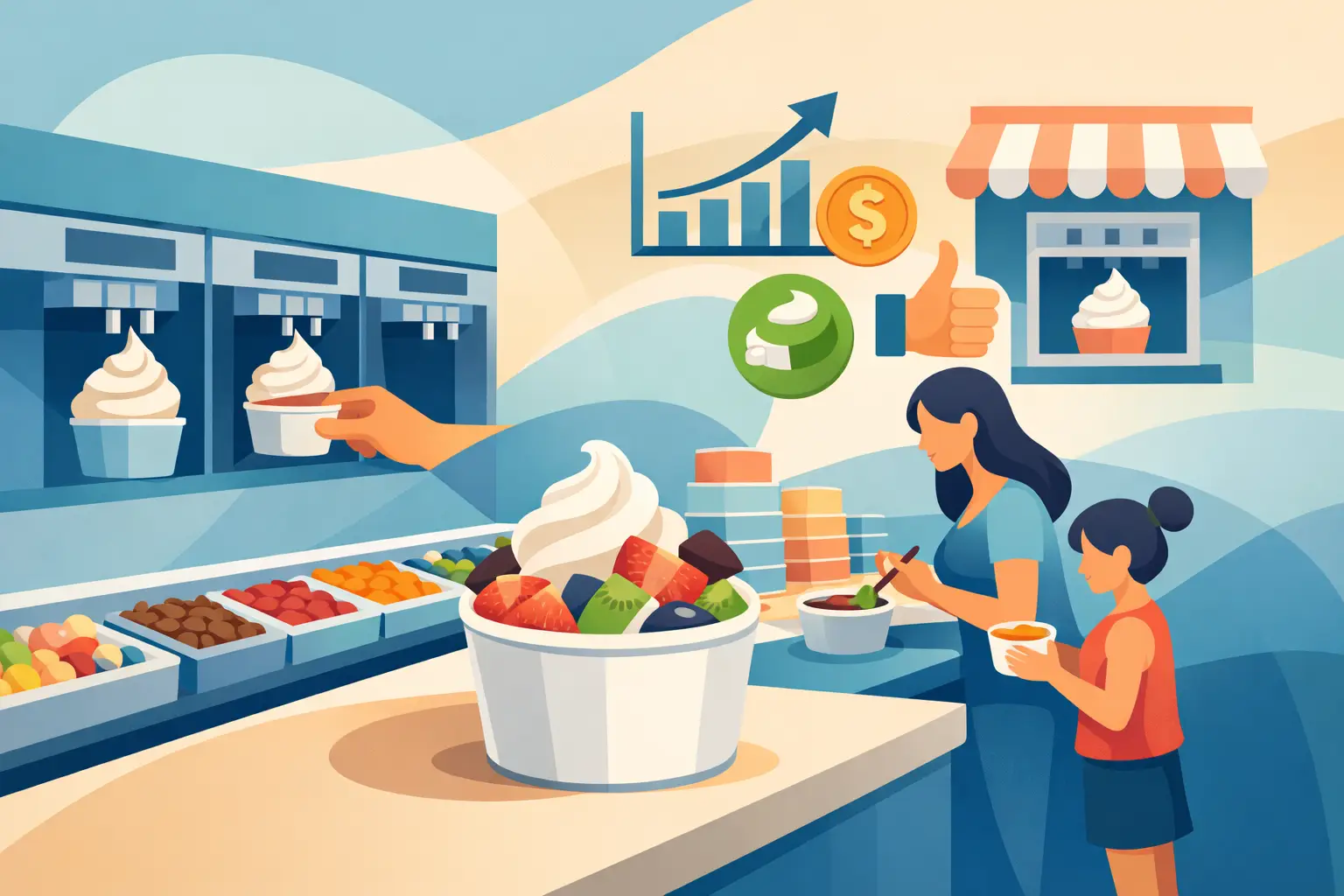
A self-serve frozen yoghurt brand can look simple from the customer side: choose a flavour, add toppings, weigh, pay and enjoy. For an owner, the real opportunity sits behind that easy experience. The strongest concepts turn a personal treat into repeat visits, social content and a business model that can perform across more than one site.
For aspiring franchisees, that distinction matters. A colourful fit-out and a popular opening weekend are not enough. The brand needs a menu people crave, a store format suited to its market and operating systems that make the day-to-day more manageable. That is how a fun dessert purchase becomes a serious business proposition.
What a self-serve frozen yoghurt brand must deliver
The category has a natural advantage: guests are part of the product. They choose their base, build their own combination and leave with something that feels personal. That participation creates more energy than a standard counter-service transaction, especially for younger customers, families and groups catching up after school, work or dinner.
But choice only works when it is well curated. Too many flavours, inconsistent toppings or a confusing path through the store can make a visit feel messy rather than joyful. The best self-serve frozen yoghurt brands make the experience intuitive. The machines are inviting, the toppings look fresh, the pricing is easy to understand and the store gives customers a reason to take a photo before they take a bite.
There is also a commercial benefit to getting this right. Self-serve allows guests to build the dessert they want while supporting an operating model that does not rely on a large kitchen brigade or a high number of staff behind the counter. Labour still matters, particularly at peak times and in maintaining presentation, hygiene and customer service. Yet the guest-led format can reduce some of the complexity found in more labour-heavy food concepts.
That does not mean it is passive ownership. A successful store needs an owner who watches standards, leads the team, understands local trading patterns and keeps the customer experience sharp. The model can simplify operations. It cannot replace hands-on business leadership.
A menu needs more than frozen yoghurt
Frozen yoghurt remains the hero, but a single-product offer can limit the reasons people return. A customer may love a classic tart yoghurt one week, then want something different the next. Seasonal specials, new toppings and limited-edition flavours keep the experience moving without making the business unrecognisable each month.
This is where matcha can add real depth. Ceremonial-grade matcha soft-serve and matcha drinks bring a different occasion into the same store. One guest may come for a build-your-own froyo after dinner; another may stop in during the afternoon for an iced matcha. The menu becomes broader without losing its point of view.
The trade-off is discipline. Adding drinks, soft-serve and specials creates more potential sales occasions, but only if recipes, preparation and stock control are built into the operating system. A concept should not chase every trend. It should choose additions that fit the brand, travel well operationally and give customers a genuine reason to come back.
For a franchisee, menu development is one of the clearest benefits of joining an established platform. Instead of testing every flavour, supplier and recipe alone, the operator can focus on executing a menu that has been developed for the brand and refreshed with a clear commercial purpose.
Store design is part of the sales engine
Dessert is visual by nature. The swirl, the colour of the toppings, the cup and the background all matter when customers are deciding whether to share a moment on social media. A store should feel bright, contemporary and unmistakably itself, not like a generic kiosk with a few decals added at the end.
That visual identity needs to work in the real world. It should attract attention from a food-hall walkway, hold its own on a busy high street and create warmth in a compact kiosk. The best designs balance impact with practicality: durable finishes, clear customer flow, practical storage, easy cleaning and a service area that supports quick trade.
Site format matters just as much as design. A small-footprint kiosk may suit a high-traffic centre where customers want a fast, affordable treat. A larger retail store can create more room for groups, drinks and a fuller brand experience. Neither is automatically better. The right choice depends on local demographics, rent, nearby food operators, daypart traffic and the role the store can play in that precinct.
Good site selection is not a matter of finding the busiest corner. A site needs the right kind of traffic. Dessert brands often benefit from proximity to dining, cinemas, supermarkets, schools, family activity and youth-oriented retail. They also need enough visibility to turn passing interest into an impulse visit.
The franchise system should give straight answers
Starting an independent hospitality business means solving every major question yourself: where to trade, how to negotiate a lease, who will design the store, which equipment to buy, what the menu should be, how to train staff and how to keep suppliers reliable. That freedom can be appealing, but it can also be expensive and slow.
A franchise model should reduce that uncertainty with practical support, not vague promises. Prospective owners should understand what help is available with site selection, fit-out, training, supply chain, menu development, marketing and post-opening operations. They should also ask what remains their responsibility, because clear boundaries create better working relationships.
YOVIE is built around that principle: bringing together real frozen yoghurt, matcha and a youth-led store experience, while giving franchisees a defined platform for opening and operating their own location. The appeal is not just a brand you will want to wear. It is the structure behind it.
For an Australian buyer, the financial conversation should be equally clear. A turnkey investment of $350K + GST, with at least $150K in liquid capital required, is a meaningful commitment. Finance may be available to qualified applicants, but prospective franchisees should still review their cash position, borrowing capacity, working capital allowance and personal appetite for risk before moving forward.
The right franchisor will be open about the process and invite serious questions. Ask how territory availability is managed, what training looks like before opening, what support is present during launch and how performance conversations are handled once the store is trading. If a foundation-store programme is available, ask what preferred territory, commercial advantages and priority support mean in practical terms.
Repeat purchase is the measure that matters
A launch can generate excitement. A sustainable business earns a place in customers' routines. That comes from product quality, friendly service, a consistently clean store and enough newness to keep the menu interesting without disappointing regulars who have a favourite order.
Repeat purchase can come from several directions. Families may make frozen yoghurt a weekend ritual. Students may visit after class. Office workers may choose a matcha drink during the afternoon. Friends may use the store as an easy place to meet. A smart brand serves these occasions without trying to be everything to everyone.
Local marketing plays a role here, but it works best when it is tied to the store's community. Opening activity, local partnerships and social content can create awareness, while a great in-store experience gives people a reason to return. The goal is not simply to chase likes. It is to build recognition that turns into foot traffic and repeat custom.
The owner is still the difference
Hospitality experience is not always required to enter a franchise system, particularly where training, recipes, supplier relationships and operating procedures are already in place. What cannot be outsourced is ownership mindset. Strong franchisees are present, commercially curious and willing to lead people.
They pay attention to the details customers notice: a machine that needs cleaning, toppings that need replenishing, a team member who needs coaching or a queue that needs managing. They also pay attention to the details customers do not see: waste, rostering, stock ordering, local competition and weekly sales patterns.
For operators with bigger ambitions, a well-designed model can also offer a pathway beyond one location. Multi-store growth requires stronger management, more disciplined reporting and trusted team leaders, so it is not an automatic next step. But a consistent brand, clear systems and repeatable store formats give an ambitious owner a stronger foundation to build from.
The right opportunity should feel exciting on the shop floor and credible on the numbers. Look for a concept with genuine customer pull, a menu that creates more than one reason to visit and a support model that respects both the investment and the person making it. That is where a dessert brand can become a business built to grow.