
Food-Hall Franchise Examples That Earn Their Space
Food-hall franchise examples show what makes compact hospitality sites work: traffic, a clear menu, strong systems and repeat reasons to visit daily trade.
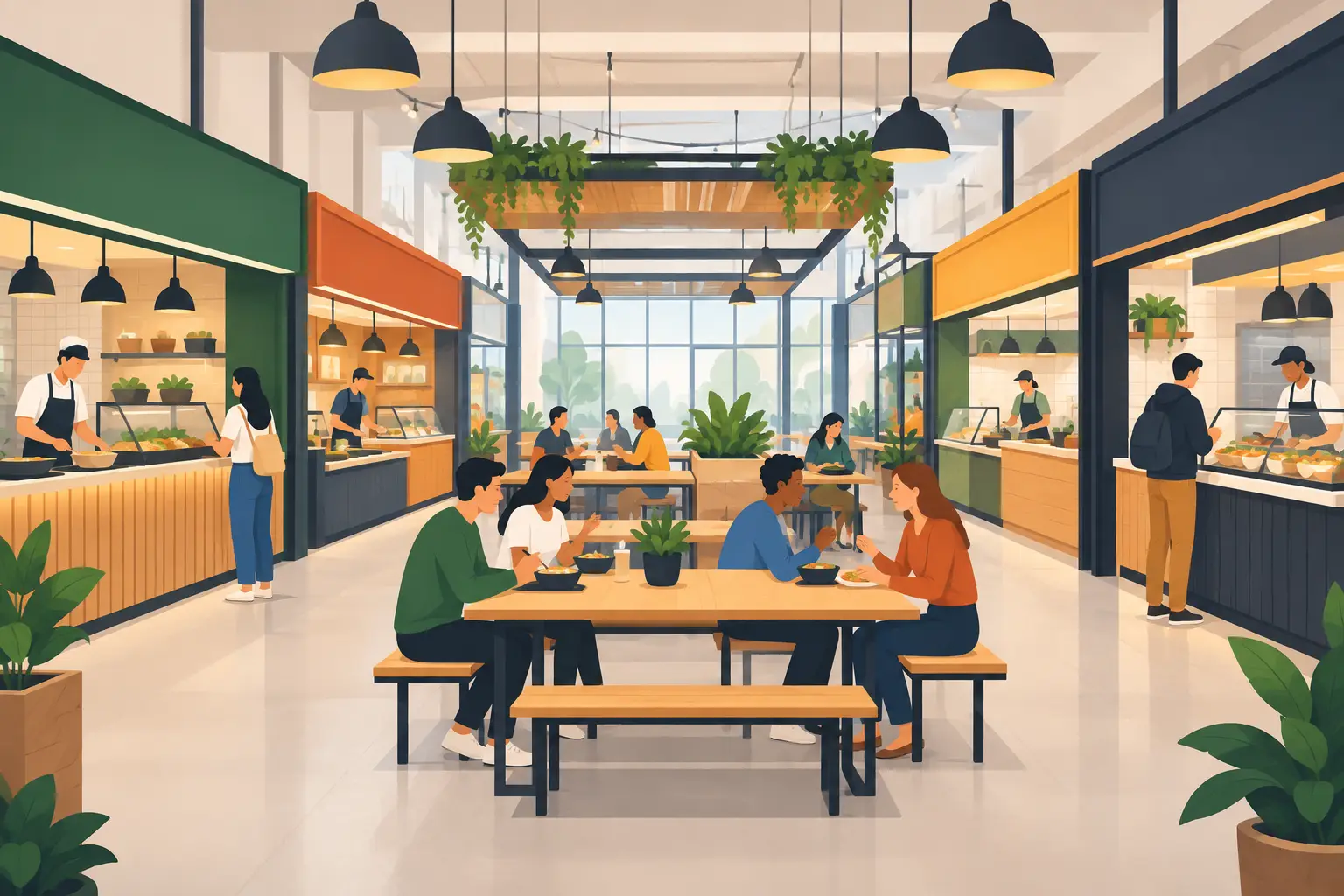
A food hall can make a compact hospitality business look deceptively simple. There is a counter, a queue, a menu and a steady flow of shoppers. But the best food-hall franchise examples are not winning because they happen to be near hungry people. They win because the concept is built for fast decisions, high visibility, repeat visits and a service model that works when the lunch rush hits all at once.
For an aspiring franchisee, that distinction matters. A food-hall site can offer strong exposure and lower entry complexity than a standalone restaurant, but it also puts your brand beside direct competitors every day. Your offer has to earn attention in seconds, then deliver an experience people want to repeat.
What food-hall franchise examples reveal
The strongest food-hall franchise examples tend to share one quality: they know exactly what job they perform for the customer. A grab-and-go lunch concept solves the midday time crunch. A specialty coffee operator creates a daily habit. A dessert brand turns a shopping trip, cinema visit or catch-up with friends into a small reward.
This clarity affects everything from the menu to the fit-out. A customer walking through a busy retail centre should be able to understand the product, price point and reason to stop without needing a long explanation. If the menu needs a staff member to decode it, or the food takes too long to make, the concept may struggle in a high-traffic setting.
The better examples also give people a reason to return beyond convenience. That might be customisation, seasonal menu drops, loyalty, a product people genuinely crave or a visual experience worth sharing. Passing traffic gets the first transaction. Relevance gets the next one.
Four food-hall models worth studying
Not every franchise format belongs in every food hall. The right model depends on the centre’s customer mix, nearby tenants, trading hours, available footprint and lease terms. Still, four categories show why certain concepts translate especially well.
1. The fast, focused meal concept
Think of a tightly edited menu built around one familiar food occasion: fresh bowls, wraps, sandwiches, noodles or a single cuisine with clear customisation. These businesses work when the ordering path is obvious and throughput is high.
Their commercial strength is speed. They can capture workers with 30 minutes to spare, parents between errands and shoppers looking for a dependable meal. Their risk is sameness. Many food halls already have several lunch options, so the operator needs a genuine point of difference in flavour, quality, service or value - not just another version of what is already there.
2. The daily ritual operator
Coffee, baked goods, breakfast items and lighter snack concepts can become part of a customer’s routine. A strong morning offer may trade differently from a lunch-led business, creating a broader daypart opportunity.
The trade-off is that ritual businesses rely heavily on consistency. One poor coffee, an unreliable opening time or a slow morning queue can quickly send regulars elsewhere. Franchise systems matter here because they support product standards, training and supply continuity. The brand is only as good as the experience customers receive at 8:10am on a Tuesday.
3. The experience-led dessert brand
Dessert is not usually a necessity purchase. That is precisely why a memorable concept can stand out. Frozen yoghurt, matcha soft-serve, loaded treats and custom creations can bring colour, theatre and an easy reason to stop after a meal or while walking the centre.
This model works particularly well when it gives customers participation. Choosing a base, adding toppings or trying a seasonal special turns a simple purchase into a personal creation. It can appeal to younger customers and families at the same time, while creating content people naturally photograph and share.
A concept such as YOVIE shows how frozen yoghurt and matcha can work together in this setting: self-serve choice drives interaction, while matcha adds craft and another reason to visit across the day. For a franchisee, the appeal is not just a bright counter. It is a menu designed to create repeat occasions without the operational weight of a full-service venue.
4. The specialist beverage concept
Juice, tea, matcha, smoothies and other specialist drinks can perform well in food halls because they are portable, fast and suited to multiple occasions. A customer may buy a drink with lunch, after the gym, between shops or as a treat in its own right.
However, beverage concepts need more than a fashionable ingredient. The market moves quickly, and a trend-led menu without a clear brand can lose momentum. Look for a system that can develop products, refresh the offer and keep quality stable across busy service periods.
A good site is more than foot traffic
High foot traffic is attractive, but it is not the whole story. A centre may be busy while the food hall is poorly positioned, dominated by one major tenant or quiet outside a narrow lunchtime window. The straight answer is that traffic only has value if it passes your storefront at the right times and includes people likely to buy your product.
Before committing to a site, franchisees should look closely at the customer journey. Is the tenancy visible from the main entry, supermarket, cinema or escalator? Does the seating area encourage people to stay? Are neighbouring brands complementary, or will they take the same customer? What does trade look like on weekdays compared with weekends, school holidays and late-night shopping?
Also consider the centre’s future, not only its current performance. Refurbishments, new anchors, residential growth and changing tenant mix can improve a location. Conversely, construction disruptions, declining office traffic or an oversupplied dining precinct can put pressure on sales. Good site selection is a mix of data, local knowledge and honest judgement.
Why the operating model matters as much as the menu
Food halls are demanding environments. Customers expect quick service, clean presentation and a product that looks as good at 3pm as it did at opening. A franchise opportunity should make this easier through a practical operating model, not simply provide a logo and a recipe book.
For first-time hospitality owners, the right support can remove major layers of complexity. Site selection assistance, store design, fit-out guidance, initial training, approved suppliers, launch marketing and ongoing operational coaching all help turn an idea into a functioning business. Hospitality experience can be valuable, but it does not have to be the entry ticket when the systems are clear and the franchisee is prepared to lead from the front.
Labour is another key consideration. A compact menu and well-designed service flow can reduce unnecessary complexity, but lower labour requirements do not mean hands-off ownership. The best franchisees stay close to their team, protect standards, understand their numbers and bring local energy to the business. The system creates the platform. The owner makes it perform.
Questions to ask before choosing a food-hall franchise
A polished brand can make every opportunity look easy. Ask the questions that reveal how the business works when the doors open. How many people are required to trade each shift? What are the peak trading periods? Which products drive sales and margin? How much food preparation happens on site? How is waste controlled? What support is available after launch, not just before it?
It is also worth understanding the fit-out and lease obligations in full. Food-hall sites can be compact, but they may still involve significant capital, centre requirements and refurbishment commitments. Review the total investment, working capital needs, franchise term, renewal options and the practical path to a second site if multi-store ownership is your goal.
The right food-hall business should feel commercially disciplined as well as customer-friendly. You want a menu people crave, a brand you will be proud to wear and a model with enough structure to grow.
A food hall gives a franchisee a ready-made audience, but it does not guarantee a ready-made business. Choose the concept that can turn that audience into regulars - one great, fast, highly visible experience at a time.