
Is a Food Kiosk Franchise the Right Move?
Considering a food kiosk franchise? See what drives site performance, the capital required and the support that helps owners build confidently in Australia.
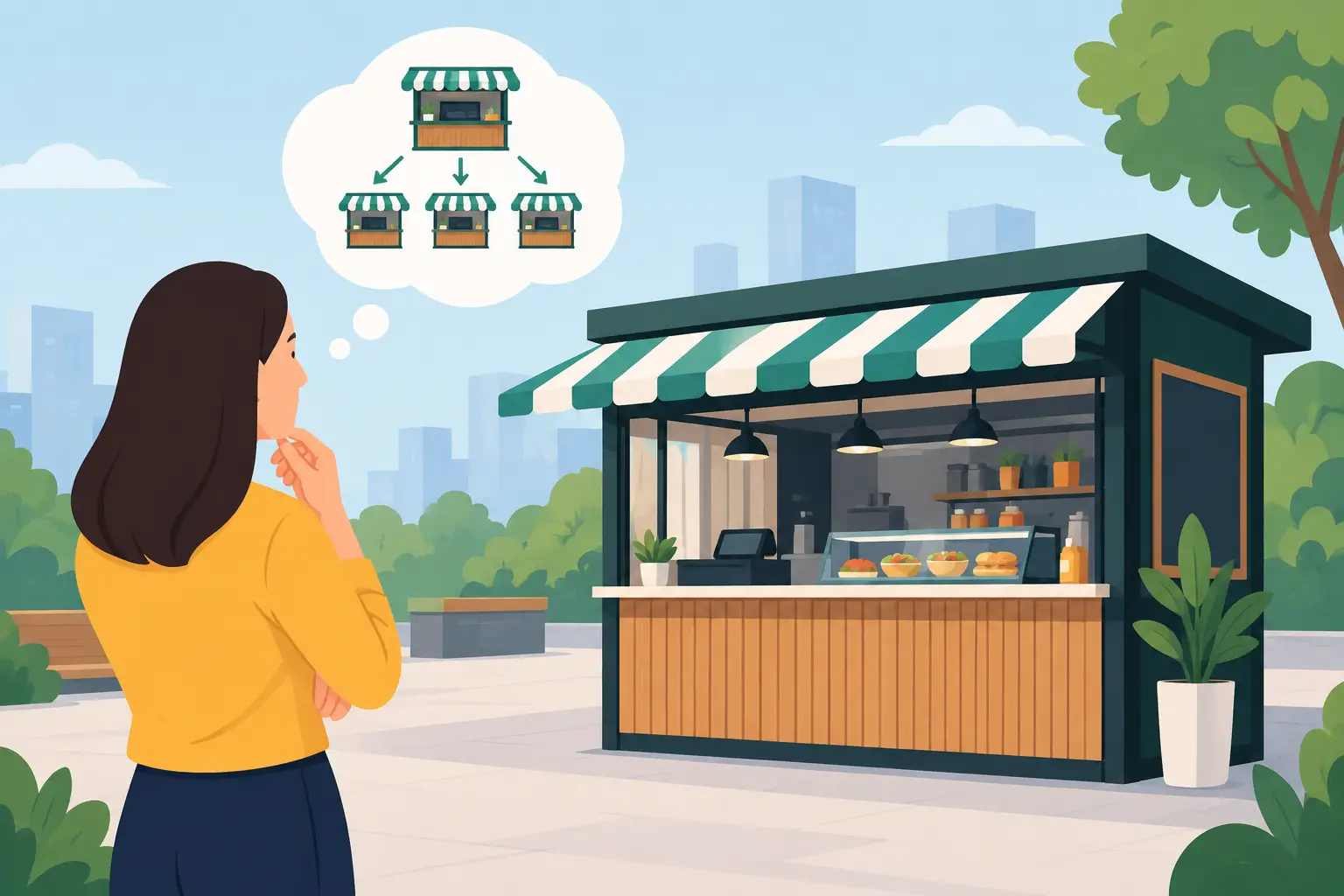
A food kiosk franchise can look deceptively simple from the customer side: a bright counter, a tight menu and a steady stream of people looking for a treat. From the owner side, the real opportunity is in what sits behind that counter - a brand people recognise, a site selected with purpose, a menu built for repeat visits and systems that make daily trade manageable.
For aspiring operators, a kiosk can be a smart entry point into hospitality. But it is not a shortcut. The right model still requires capital, commitment and a willingness to lead from the front. The difference is that a well-built franchise can remove much of the complexity involved in creating a hospitality concept from scratch.
Why food kiosks suit modern hospitality
Kiosks work because they meet customers where decisions happen quickly. Food halls, major shopping centres, high-street precincts and entertainment destinations attract people who are already out, already spending and often looking for an easy moment of enjoyment. A dessert purchase may be spontaneous, but the best brands give customers a reason to make it a habit.
The format also keeps the business focused. A compact footprint generally means less space to fit out, fewer areas to maintain and a simpler operating flow than a full-service venue. That does not mean every kiosk is low-cost or low-effort. Premium retail environments can carry meaningful occupancy costs, and peak periods need sharp service. It means the model can be designed around a clear customer journey rather than a sprawling menu and a large back-of-house operation.
For a contemporary dessert business, this is especially relevant. Guests want choice, visual appeal and products that feel worth sharing. Self-serve frozen yoghurt creates participation. Matcha adds craft, colour and a reason to visit beyond a traditional ice cream occasion. Together, they can extend the daypart and create more than one kind of customer craving.
What makes a food kiosk franchise worth backing
A kiosk format alone is not a business case. The stronger question is whether the brand has built a complete operating platform around it.
Start with the customer proposition. A menu needs to be easy to understand at a glance, enjoyable to customise and strong enough to bring people back. In desserts, repeat purchase is shaped by more than sweetness. Customers are increasingly drawn to products that feel lighter, premium and personal, without losing the sense of indulgence. Seasonal specials also matter. They give regulars something new to try and give the business fresh reasons to appear in social content.
Then look at the visual identity. In a crowded shopping centre or food hall, a kiosk has seconds to earn attention. Store design, packaging, product display and staff presentation all need to work together. A brand you will want to wear is usually a brand customers are happy to photograph, tag and recommend.
Finally, test the operating model. A franchise should offer more than a logo and recipe book. It should provide documented processes, approved suppliers, training, launch planning, marketing direction and ongoing support. These elements do not remove the owner’s responsibility, but they can reduce the guesswork that makes independent hospitality so demanding.
Lower labour complexity matters
Labour is one of the biggest realities in hospitality. A concept with a focused product range and a well-designed service flow can often be run with a leaner team than a large café or restaurant. That can make rostering, training and quality control more manageable.
It depends on the site and trading hours. A busy centre location may still require strong coverage during weekends, school holidays and promotional periods. The goal is not to under-staff. It is to invest in a model where each role is clear, service moves efficiently and the team can consistently deliver the experience customers came for.
Site quality can outweigh a cheap deal
The wrong location can make even a great concept work too hard. A lower rent is not always better value if the site lacks relevant foot traffic, visibility or nearby customer occasions. For a dessert kiosk, assess who passes the site, when they pass it and what else brings them there.
A site near fashion, cinema, family entertainment, supermarkets or dining can create useful customer flow. So can a high-street position with strong afternoon and evening activity. But there is no universal rule. A commuter-heavy location may perform differently from a weekend-led suburban centre, and the menu, hours and staffing plan need to reflect that reality.
This is where franchise support can be valuable. Experienced site selection assistance should consider tenancy conditions, frontage, centre mix, utilities, loading access, storage and the practical requirements of the concept, not just a projected footfall number.
The capital question: be clear before you enquire
A food kiosk franchise is a commercial investment, not a side project you can fund on optimism alone. Before starting conversations, understand the full capital picture: franchise fee, fit-out, equipment, initial stock, professional fees, landlord requirements, working capital and GST.
For YOVIE, the turnkey investment starts from $350,000 + GST, with at least $150,000 in liquid capital required. Finance may be available to qualified applicants, but it should be viewed as part of a considered funding plan, not a reason to stretch beyond a comfortable position.
Working capital deserves particular attention. Opening day is exciting, but the first months are when an owner is building local awareness, learning the site’s rhythm and developing a reliable team. Having sufficient funds to trade properly, market locally and respond to real operating needs is more valuable than cutting corners to reach opening day sooner.
Ask for the straight answers. What is included in the investment estimate? What is excluded? What ongoing fees apply? What assumptions sit behind the financial information? What happens if construction timing changes? A professional franchisor will welcome well-prepared questions because informed franchisees make better long-term operators.
You do not need hospitality experience, but you do need ownership mindset
Prior hospitality experience is not always required. A good franchise system can train a capable person in product preparation, service standards, food safety, team leadership, ordering, opening routines and daily reporting. That is one of the key reasons people choose franchising over building alone.
What cannot be handed over is accountability. The strongest franchisees are present, commercially aware and comfortable leading people. They understand local customers, care about standards and know that small details shape the sale: a clean topping bar, a warm greeting, a fast queue, a product made properly and a store that looks as good at 8 pm as it did at opening.
This is also why the model can appeal to different kinds of people. A corporate professional may bring discipline and leadership. An existing business owner may bring commercial confidence. A hospitality operator may bring service instincts. Each can succeed if they are ready to follow a proven system while taking genuine responsibility for their territory.
Think beyond the first store
For some operators, one kiosk is the goal: a customer-facing business with a clear local presence. For others, it is the first step towards a multi-site portfolio. Both paths are valid, but they require different decisions from the beginning.
If multi-site ownership is part of the ambition, ask how the brand approaches territory availability, management structures and future opportunities. Foundation-store programs can be particularly meaningful for early franchisees, offering priority territory selection, commercial advantages and closer launch support. The value is not simply exclusivity. It is the chance to establish a position in a growing network while the local market is still being shaped.
Growth should still be earned. Get the first store operating consistently before assuming a second will be easier. Build a capable team, understand the numbers, develop routines that hold up when you are not on site and learn what drives repeat trade in your market.
Questions to ask before choosing a franchise
Before committing, spend time with the detail rather than just the visual promise. Ask how training works before and after launch, who manages supply chain relationships, how menu innovation is tested and what support looks like when operational challenges arise. Find out whether the franchisor helps with site selection and lease review processes, and how local area marketing is planned.
You should also ask about the franchise term, renewal options and the expectations around owner involvement. A renewable 5 + 5-year term, for example, creates a longer runway than a short-term pop-up arrangement, but it also deserves careful review alongside the franchise agreement and lease commitments. Obtain independent legal, accounting and financial advice before signing anything.
The right opportunity should feel exciting because the brand has energy, but credible because the commercial foundations are clear. Look for a menu people crave, a format that fits the site and a support team prepared to have direct conversations when the questions get serious.
A kiosk can be compact without being small in ambition. Choose the business that gives you room to lead well, learn quickly and create a customer experience people come back for.