
How Dessert Kiosks Reduce Staffing Pressure
See how dessert kiosks reduce staffing through compact layouts, self-serve ordering and focused menus, without sacrificing service, quality or growth ahead.
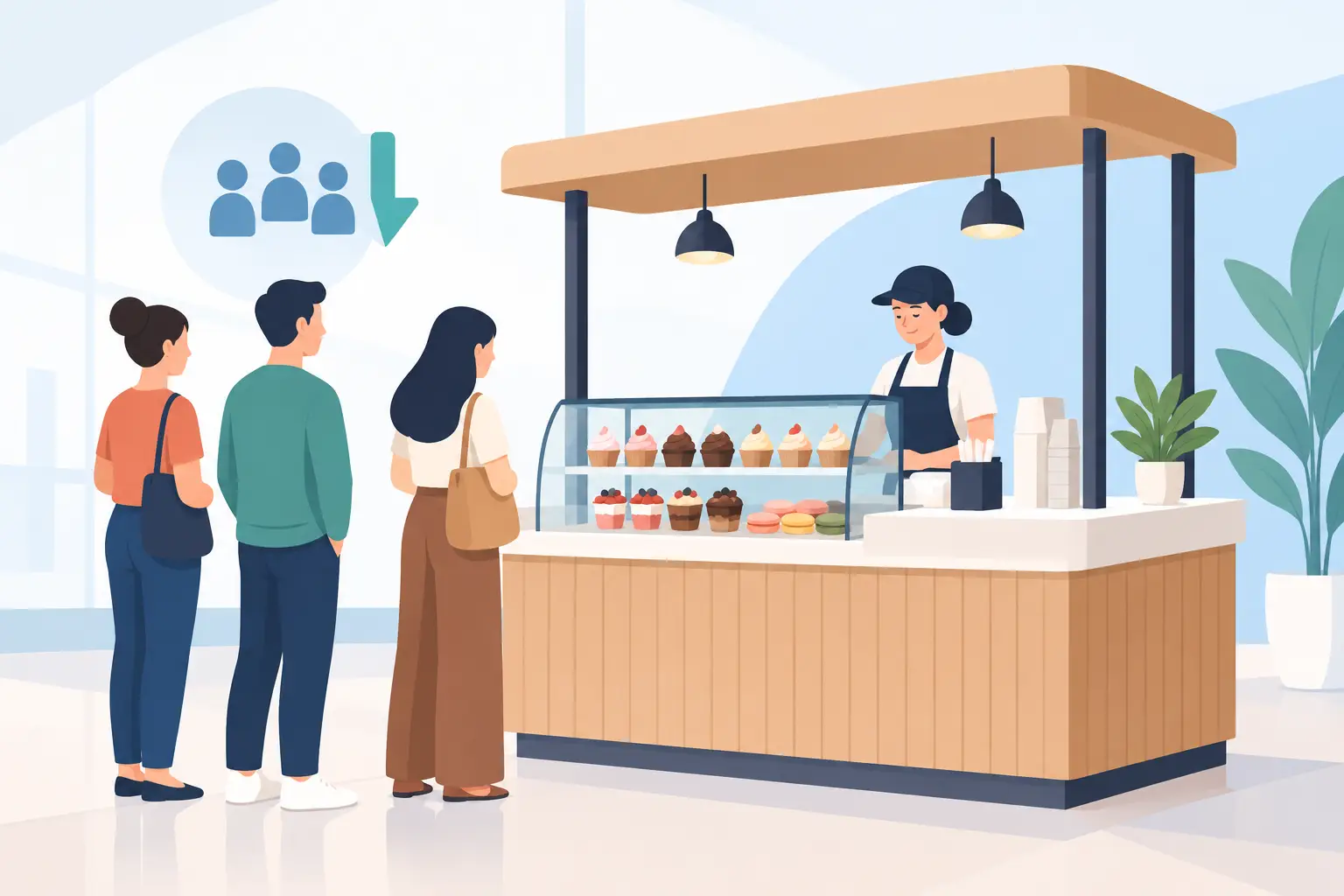
The busiest 30 minutes of a dessert trade can make or break a roster. School finishes, dinner crowds and weekend foot traffic often arrive at once, yet the average transaction needs to stay quick, friendly and profitable. That is where understanding how dessert kiosks reduce staffing becomes commercially useful. The right kiosk model does not ask a small team to do more for less. It removes unnecessary steps from the customer journey so people can focus on service, presentation and keeping the experience moving.
For aspiring franchisees, lower labour requirements can make a compact dessert business easier to manage from day one and more practical to scale over time. But the savings are not automatic. They come from considered site design, a focused menu, reliable equipment and operating systems that work when the queue is five people deep.
How dessert kiosks reduce staffing without reducing service
A well-designed kiosk puts the product journey in the right order. Guests should be able to see what to do, choose quickly and move through the space without needing a staff member to explain every step. In a self-serve frozen yoghurt format, for example, the customer can select their yoghurt, add toppings and proceed to payment with minimal intervention.
That changes the role of the team. Instead of scooping every serve, taking every order and assembling every topping combination behind a counter, staff can welcome guests, maintain presentation, replenish popular items and step in when help is genuinely needed. The experience still feels personal, but labour is directed towards moments that add value.
A smaller footprint means fewer moving parts
A kiosk has less area to cover than a large café or full-service restaurant. There are fewer tables to clear, fewer zones to supervise and less distance between the point of sale, product station, storage and wash-up area. Those seconds matter across hundreds of transactions.
Compact does not mean cramped. It means intentional. A smart layout gives each part of the team a clear working zone, keeps high-use ingredients close at hand and avoids staff crossing paths during a rush. When the site is designed around the actual trade flow, one person can complete tasks that would otherwise require two.
A smaller format can also reduce opening and closing workloads. There is less floor space to clean, fewer display areas to reset and a tighter stockholding requirement. That can help owners build more efficient shifts while still meeting food safety and presentation standards.
Self-serve shifts work to the customer
The appeal of self-serve is not only operational. Customers enjoy making their own combination, choosing their toppings and creating something worth sharing. For a youth-led dessert brand, that participation is part of the product.
From a staffing perspective, it removes repetitive assembly work from every sale. A team member does not need to ask which base, which topping or how much sauce for each customer. Clear signage, attractive product displays and a logical station sequence do much of that work before the guest reaches the register.
There is a balance to protect. Self-serve areas must be clean, well stocked and easy to understand. Staff cannot disappear into the back room simply because guests are serving themselves. The best operators stay visible, keep toppings looking fresh and respond quickly when a machine, payment terminal or product station needs attention.
Labour efficiency starts with the menu
A menu people crave still needs to be practical to produce. Every additional ingredient, garnish or made-to-order process adds preparation time, stock complexity and training requirements. That does not mean a dessert kiosk should feel limited. It means the menu should create variety through smart combinations rather than a long list of labour-heavy one-offs.
Frozen yoghurt and matcha can work well together because they create different reasons to visit while sharing a compact operating environment. Frozen yoghurt supports personalisation and fast throughput. Matcha soft-serve and drinks add craft, visual appeal and a premium feel, provided the recipes are clear and the build process is repeatable.
Repeatable recipes protect speed and quality
When a product has a defined recipe, portion guide and presentation standard, new team members can learn it faster. More importantly, the result is consistent whether the owner is on shift or a casual team member is running the counter.
Consistency reduces waste as well as labour pressure. If staff are guessing portions or remaking drinks, the cost is not just the ingredient. It is the time taken away from the queue. Simple systems for cups, toppings, sauces and drink builds help protect margins while giving customers the quality they came back for.
Seasonal specials still have a place. They can create excitement, social content and repeat visits. The commercial test is whether a special can be produced with existing equipment, familiar ingredients and a short training brief. If it needs a separate process for only a handful of sales each day, it may create more roster pressure than revenue.
Better rostering comes from predictable tasks
Dessert kiosks are often strongest when the roster matches the trade pattern, rather than copying a traditional café roster. A quieter weekday period may only require an owner-operator or a small team. Peak periods need enough hands to keep the space clean, process payments and maintain a great guest experience, but not a large kitchen brigade.
This gives franchisees more control over their labour planning. The aim is not to run every shift with the lowest possible headcount. The aim is to schedule the right people at the right time, with work that is easy to prioritise.
A clear daily rhythm helps: prepare and replenish before peak trade, stay guest-facing during the rush, then reset, clean and complete stock checks in quieter windows. When those routines are documented, staff do not need to wait for instructions on every shift. Owners can spend more time leading the business and less time putting out avoidable fires.
Where staffing savings can disappear
The kiosk model is efficient only when the details hold up. A poorly positioned topping bar, an unreliable machine or a confusing menu can quickly turn a small team into a stressed team. Labour savings should never rely on cutting corners with cleaning, allergen controls, food safety or customer care.
Site selection matters too. A kiosk in a high-traffic shopping centre has different demands from a high-street store or food-hall location. A site with strong weekend surges may need extra team members for short, high-volume periods. That is not a failure of the model. It is good rostering based on real customer behaviour.
Owners should also be realistic about their own role. A lower-labour business can be an attractive pathway into hospitality, especially for people without prior industry experience, but it is not passive income. At launch, hands-on leadership helps set standards, build a capable team and understand the local trade. As systems mature, a well-run kiosk can become easier to supervise and more repeatable across sites.
Systems turn a compact kiosk into a scalable business
Independent operators often spend months solving the same problems: choosing equipment, testing recipes, finding suppliers, planning a layout and writing training materials. A franchise platform shortens that learning curve by providing a proven operating framework, while the franchisee brings local leadership and energy to the site.
At YOVIE, the model is built around a bright frozen yoghurt and matcha experience designed for compact formats, clear product routines and lower labour requirements. Franchisees receive support across site selection, fit-out, training, supply chain, menu development and ongoing operations, so they are not building the system from scratch while trying to serve their first customers.
That structure becomes especially valuable for operators with multi-store ambitions. The first location teaches you the rhythm of the business. The second and third locations depend on whether the systems can be taught, measured and repeated without every decision sitting with the owner. A focused menu, efficient footprint and strong training process create a more credible pathway to that growth.
Before choosing any dessert franchise, ask direct questions about average shift tasks, peak-period staffing, cleaning routines, staff training time, equipment support and the level of owner involvement expected. The straight answers matter more than a headline claim about low labour.
A great dessert kiosk should feel full of energy to customers and controlled behind the counter. When the format gives guests more freedom and gives the team clearer work, staffing becomes a business advantage rather than the daily bottleneck.