
Retail Kiosk Fitout Guide for Franchise Owners
Our retail kiosk fitout guide explains how franchise owners can turn a compact site into a high-impact store built for service, sales and repeat visits.
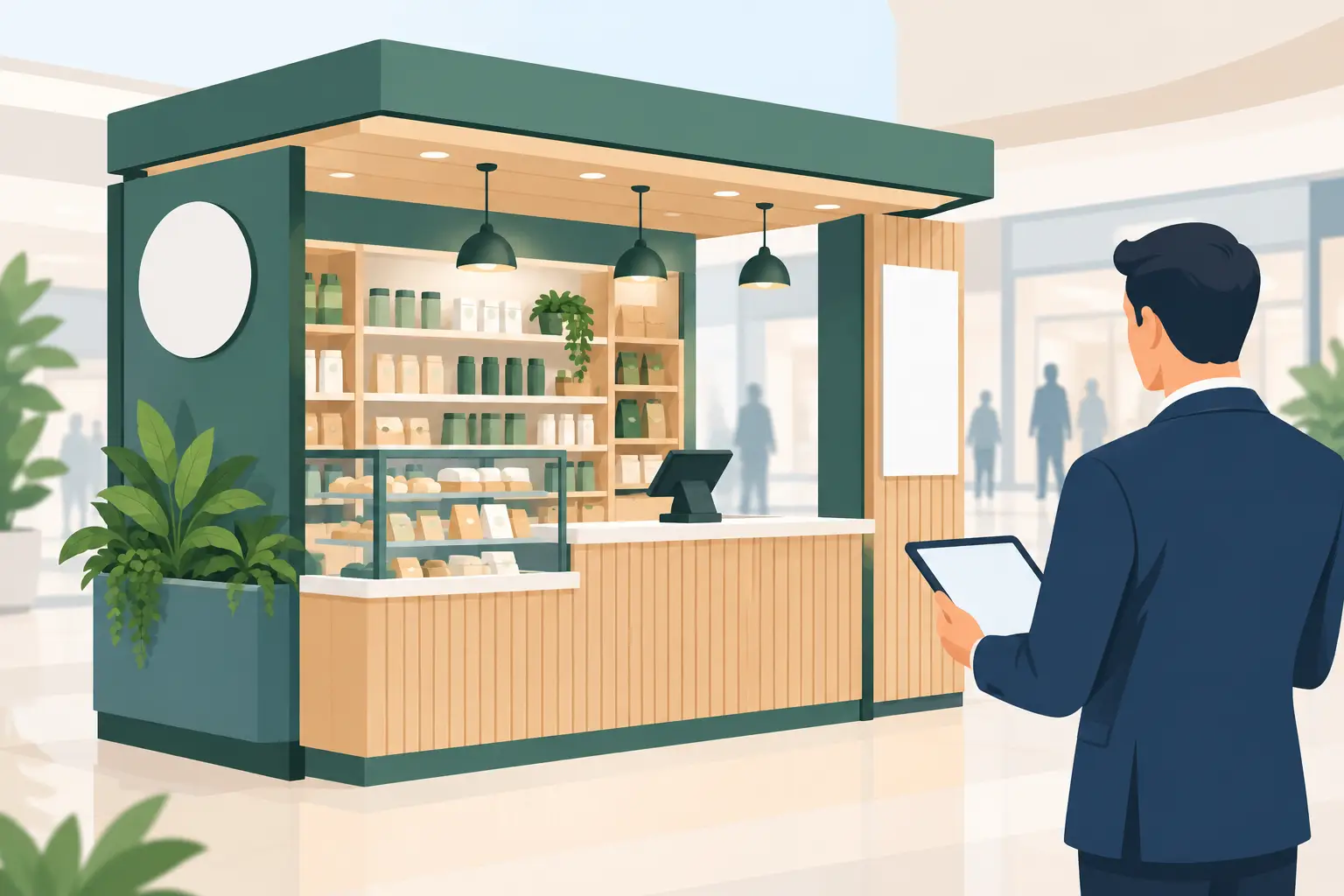
A great kiosk has no room for wasted decisions. Your counter position, queue line, freezer access and menu visibility can affect every sale, every shift and every customer impression. This retail kiosk fitout guide is for prospective franchise owners who want the straight answers on turning a compact retail footprint into a customer-facing business built to perform.
A kiosk fitout is not simply about making a small space look good. It is where brand experience, speed of service, food safety, labour efficiency and landlord requirements meet. Get it right and a compact site can feel energetic, easy to shop and ready for repeat visits. Get it wrong and even a busy centre location can become difficult to operate.
Start With the Customer Journey
The best retail kiosks make the next step obvious. A customer should be able to spot the offer from a distance, understand where to order or begin serving themselves, move through the space without hesitation, pay easily and leave with a product they want to share.
For a frozen yoghurt and matcha concept, visibility matters from the first glance. Colour, lighting, digital menus and product theatre all have a job to do. Guests need to see the flavours, toppings and finished creations without a staff member having to explain every choice. That is especially valuable in busy food halls and major shopping centres, where people decide quickly.
Think about the journey in sequence: approach, browse, choose, customise, pay and collect. If one stage interrupts the next, queues build and the experience loses its sense of fun. Self-serve formats need clear entry and exit points. Staff-led ordering needs an obvious collection zone so customers are not standing in the same place as people deciding what to buy.
Make Every Square Metre Earn Its Place
Small-format retail is a commercial advantage when it is planned with discipline. A smaller footprint can mean a lower occupancy cost and a leaner team, but only when the back-of-house still supports reliable trade.
Your fitout needs to allow for equipment, dry storage, cold storage, handwashing, cleaning supplies, packaging, staff movement and stock deliveries. These details are rarely exciting in a design presentation, yet they decide whether the store works at 2 pm on a Saturday when the line is out the front.
A common mistake is dedicating too much space to the customer-facing counter and leaving too little room behind it. The front should feel open and inviting, but the team needs enough clearance to replenish toppings, prepare drinks, manage dishes and serve customers without constantly crossing paths. A beautiful kiosk that slows down during peak trade is an expensive compromise.
Design for peak periods, not quiet moments
Assess the layout around your busiest likely trading window. How many customers can stand in line without blocking nearby retailers? Can two or three team members work behind the counter at the same time? Where do completed orders wait? Can stock be topped up while service continues?
The answers depend on your site and menu. A high-footfall shopping centre kiosk may need a more deliberate queue strategy than a suburban high-street site. A dessert business with strong after-school and weekend demand must be ready for short, intense rushes rather than steady all-day traffic.
Build a Fitout That Sells the Brand
Kiosk design is part of the product. Customers do not separate the bowl, the matcha, the signage and the store atmosphere into different experiences. They remember the full moment.
That is why a strong fitout balances visual impact with clarity. The colour palette, materials, finishes and lighting should make the kiosk recognisable from across the floor. At the same time, prices, flavour options and service instructions must remain easy to read. Too much visual noise can make a youthful concept feel confusing. Too little personality can make it disappear among national chains.
Social sharing is also practical, not superficial. Products that look good in a customer’s hand, a counter that frames the making process and signage that photographs well can create organic local awareness. The aim is not to build a photo set at the expense of operations. It is to create a space customers naturally want to show friends.
YOVIE approaches this balance through a bright, contemporary format designed around frozen yoghurt participation, matcha craft and a menu people crave. For franchisees, that means the physical site is designed to support the brand promise, rather than asking an owner to invent it from scratch.
Plan Services Before Finalising Design
Many fitout delays start before construction, when a preferred design meets the reality of available services. Water, drainage, power, ventilation, grease requirements, fire systems and communications all need early investigation.
Do not assume a site can support your intended equipment simply because it previously housed food retail. Ask what is already in place, what needs upgrading and who is responsible for the cost. Existing infrastructure can reduce the build scope. It can also conceal limitations that only become apparent after lease negotiations are underway.
Power load is particularly relevant for refrigeration, soft-serve equipment, lighting, point-of-sale systems and beverage preparation. Drainage and water connections affect cleaning, food preparation and compliance. In some centres, access for trades, delivery windows and work-hour rules can also shape the construction schedule.
This is where franchise support and experienced project management add real value. A proven model can identify fitout risks early, work within centre requirements and reduce the number of decisions falling on a first-time owner. You still need to understand the budget and timeline, but you should not have to learn every construction lesson the hard way.
Treat Compliance as Part of the Design Brief
Retail kiosk fitouts must meet more than a visual standard. Food safety, accessibility, workplace safety, building approvals and shopping centre standards all influence the finished space.
Handwashing facilities, cleanable surfaces, refrigeration performance and separation between food handling and cleaning activities need to be practical, not token additions. The fitout should make the right behaviour easy for staff during a busy shift. If bins, sanitiser or packaging storage are placed awkwardly, shortcuts become more likely.
Accessibility deserves the same attention. Counter heights, transaction areas, queue access and circulation space should work for a broad range of customers. A kiosk is a public-facing business. Every part of the experience should feel welcoming and straightforward.
Your franchisor, designer, certifier and landlord each have a role, but the franchisee should stay close to the process. Ask what approvals are required, when they are due and what could affect the opening date. A delayed launch can carry real holding costs, so clear ownership of every approval matters.
Keep the Budget Focused on What Drives Trade
A turnkey investment figure is helpful because it gives future owners a clearer view of the overall commitment. Still, every site is different. Size, condition, services, centre rules and landlord contributions can all influence the final cost.
Spend where customers notice and where operations rely on quality: frontage, signage, lighting, equipment, refrigeration, durable work surfaces and customer flow. Be cautious with bespoke features that look impressive but are difficult to repair, clean or reproduce across future locations.
A good fitout should also be maintainable. Ask how finishes will look after hundreds of cleaning cycles, whether replacement parts are readily available and how equipment access works when servicing is required. A lower upfront cost can be false economy if it creates downtime or frequent repairs.
Protect opening-day momentum
Fitout planning should run alongside recruitment, training, supplier set-up, local area marketing and launch preparation. Opening a kiosk is not the moment construction ends. It is the moment the operating rhythm begins.
Use the final weeks to test the customer journey, practise peak-period service, check stock storage and make sure every sign, menu and system is ready. The first customers will quickly tell you where friction remains. A team that knows the layout and feels confident in the service flow can turn opening-week attention into repeat trade.
The right kiosk is not the biggest, flashiest or most complicated one. It is the one that makes the brand feel impossible to miss, gives customers a reason to return and gives an ambitious owner a practical platform to grow.