
Why Ceremonial Matcha Soft Serve Draws Crowds
Ceremonial matcha soft serve pairs premium product theatre with repeat appeal, giving modern dessert venues a sharp and memorable point of difference.
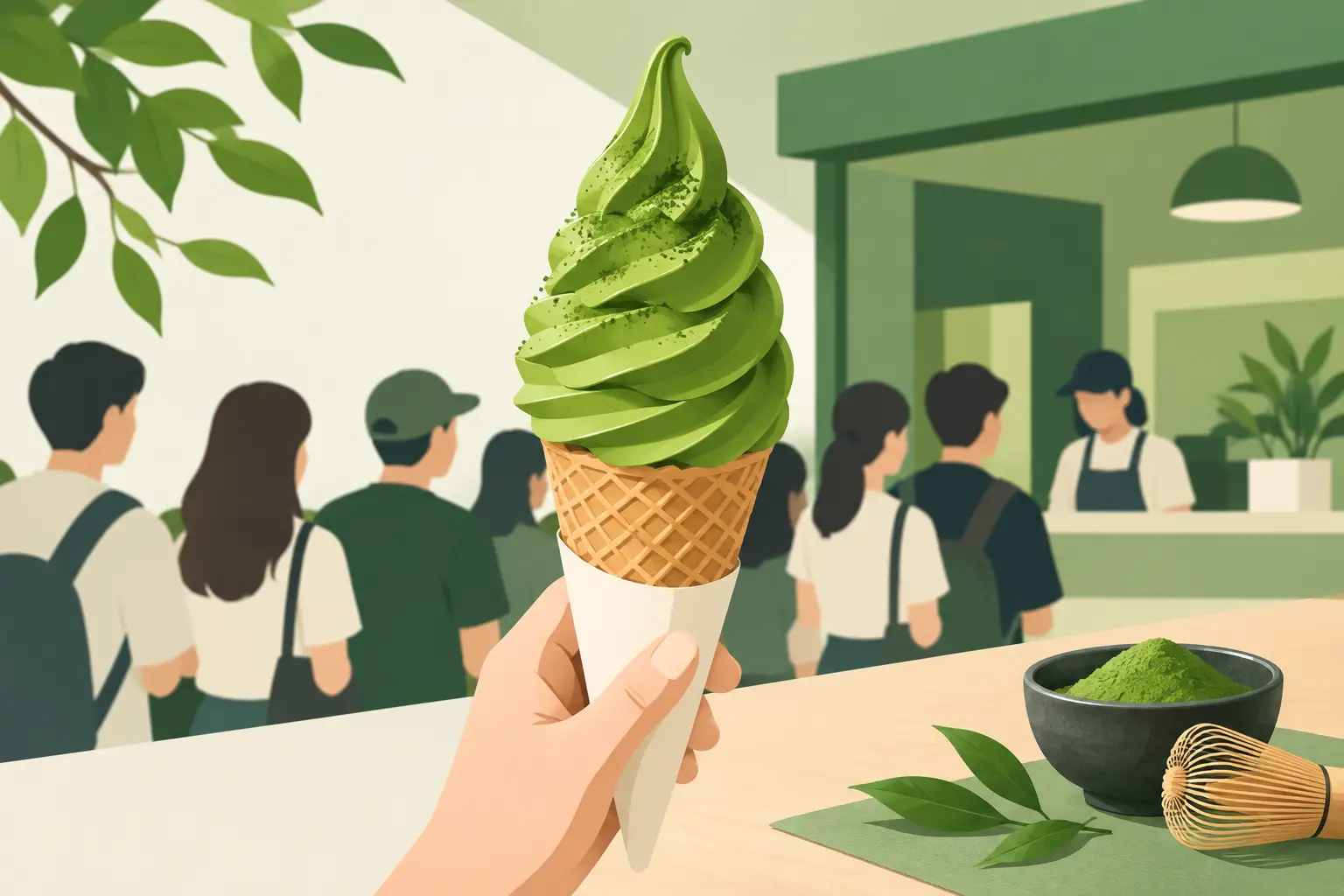
A bright green swirl can stop people mid-scroll. But ceremonial matcha soft serve earns its place on a dessert menu for more than its colour. It brings a recognisable premium cue, a distinctive flavour and a product ritual customers are already primed to seek out.
For a modern dessert operator, that combination matters. The right menu item needs to look like a reason to visit, taste like a reason to return and fit a system that can be delivered consistently during a busy Saturday afternoon. Matcha soft serve can do all three - if the product, positioning and operation are built around it properly.
It turns a dessert into a destination
Traditional soft serve is familiar. Frozen yoghurt is personal and playful. Ceremonial-grade matcha introduces another layer: craft. Guests understand that ceremonial matcha signals quality, even if they are not matcha experts. It suggests a more considered choice than an everyday green tea flavouring.
That perception helps a venue stand apart in crowded retail precincts, food halls and high streets. When every customer has plenty of coffee, gelato and quick-service dessert options nearby, a compelling point of difference has real commercial value. A menu people crave starts with a product they cannot get in the same form next door.
Matcha also crosses several customer occasions. Someone may choose it after lunch as a lighter-feeling treat, during an afternoon catch-up, after dinner or as a shareable stop between shops. It can appeal to younger customers who follow food trends closely, while still feeling accessible enough for families and first-time visitors.
The opportunity is not to make matcha feel overly serious or exclusive. The best expression is bright, simple and welcoming: a premium soft serve served with confidence, then made personal through toppings, sauces and seasonal combinations.
Why ceremonial grade changes the conversation
The phrase ceremonial grade is not just decoration on a menu board. In matcha, grade speaks to the ingredient’s intended use, colour, aroma and flavour profile. A high-quality ceremonial-style matcha is generally valued for its vivid green appearance and balanced vegetal, gently sweet character. Those qualities carry through strongly in a frozen dessert, where colour and flavour must hold their own against cold temperatures and toppings.
For operators, quality creates an immediate brand benefit. A pale, overly bitter or artificial-tasting matcha product can disappoint fast. Guests may forgive a flavour that is unfamiliar to them; they are less likely to forgive one that looks great online but tastes flat in person.
There is a trade-off. Premium ingredients cost more, and a ceremonial positioning raises expectations. That means portion control, recipe discipline and supply consistency are not optional details. They are what protect both the guest experience and the margin.
The aim is not to chase complexity for its own sake. It is to create a product with a clear story: considered matcha, a creamy frozen format and a finish that looks as good as it tastes. That clarity makes training easier, marketing sharper and customer choice quicker.
Flavour that invites a second visit
Good matcha has a character that differs from chocolate, strawberry or vanilla. It can be grassy, creamy, slightly savoury and softly sweet. That makes it particularly useful in a dessert range because it gives regular customers a reason to rotate their order.
Pairings can be familiar or more adventurous. Strawberry brings brightness. Mango leans tropical. White chocolate adds indulgence. Mochi, crunchy biscuit elements and fruit pieces introduce contrast. A simple matcha swirl can also be the hero on its own for guests who want the cleanest expression of the flavour.
Not every topping belongs on every cup. Overloading the product can bury the matcha and slow service. The better approach is to offer enough choice for personalisation while keeping a few signature builds that show customers exactly where to start.
The visual advantage is real
Dessert has become part product, part social signal. Customers photograph the cup, the swirl, the topping bar and the space where they bought it. Ceremonial matcha soft serve gives a venue a naturally distinctive visual asset without needing novelty for novelty’s sake.
That green tone contrasts beautifully with berries, biscuit crumbs, sauces and bright packaging. It reads quickly in a short video or a photo taken across the table. More importantly, it looks intentional. A guest sees something that feels current, premium and a little different from the usual vanilla cone.
For a franchise operator, visual appeal is not a vague branding benefit. It can support local awareness, customer-generated content and repeat traffic. A store that gives people something worth sharing can stretch each visit further than paid advertising alone.
Of course, appearance has to be backed by delivery. If a product melts too quickly, varies wildly between team members or arrives looking unlike the image, the social advantage disappears. Store design, equipment, staff training and service rhythm all shape the final moment in the customer’s hand.
A smart fit for a better-for-you dessert mix
Customers do not all define better-for-you in the same way. For some, it means a lighter option than a heavy dessert. For others, it is ingredient quality, portion flexibility or simply choosing something that feels less routine. Matcha can sit naturally within that conversation, but it should not be used to make claims the product cannot support.
The strongest positioning is balanced rather than preachy. Matcha soft serve can feel premium and refreshing, while toppings let customers choose their own level of indulgence. One guest may go for fruit and a clean finish. Another may add sauce, crunch and extra texture. Both should feel like they have made the right choice.
This is where frozen yoghurt and matcha belong together. One offers freedom and participation; the other brings craft and contemporary relevance. Together, they give a dessert business more than one reason for customers to walk in.
What operators need to get right
A successful product is not only a great recipe. It must work at store level, day after day. This is especially relevant for first-time hospitality owners, who need systems that reduce avoidable complexity without making the customer experience feel standardised.
Start with recipe control. Matcha has a powerful flavour and colour, so small variations in preparation can show up immediately. Clear specifications, reliable supply and practical training help every serve meet the same standard. A branded operation should make these details easier to manage, from approved ingredients through to serving methods.
Then consider speed. Soft serve is designed for fast service, but high-volume trading still requires a clean workflow. Team members need to know how to guide a customer through flavours and toppings without creating a queue that kills impulse purchases. Signature builds can help here, particularly for guests who want a quick decision.
Waste control matters too. Premium positioning cannot come at the expense of careless operations. Accurate forecasting, sensible portioning and a menu that uses ingredients across multiple items can help protect profitability. Seasonal specials can create excitement, but they need clear supplier availability and straightforward execution.
Finally, be honest about local demand. A dense inner-city site, a suburban shopping centre kiosk and a high-street family destination may each favour different menu emphasis. In one location, matcha may lead the conversation. In another, it may be the distinctive feature within a broader frozen yoghurt offer. The product is versatile, but the local customer should shape how it is sold.
A product with room to grow
Ceremonial matcha has moved beyond a niche café order. It now has the recognition to draw curiosity and the flavour credibility to build loyalty. In soft serve form, it becomes more accessible, more visual and easier to enjoy as an everyday treat.
That makes it valuable for growth-minded operators. It brings a premium signal without requiring a complicated kitchen, supports seasonal creativity without abandoning a core menu and gives customers a clear reason to choose your store over a familiar alternative.
At YOVIE, the opportunity is built around that kind of contrast: playful self-serve frozen yoghurt alongside thoughtfully made matcha desserts, within a brand customers want to photograph and return to. For franchisees, the bigger appeal is having the systems, supply chain, training and support behind the counter - not just a trend on the menu.
The best next step is to look at the product through both lenses. Ask whether customers will remember it, then ask whether your team can serve it brilliantly at pace. When the answer to both is yes, you have more than a green swirl. You have a reason for people to come back.